This project reflects my approach to integrating emerging technologies into editorial practice—using AI not as a shortcut, but as a tool to extend conceptual thinking and visual authorship.
Client | St. Joseph Communications (SJC) for Maclean’s magazine
Platforms | Print, Web, Social
Project | Special Issue Cover, Landing Page, Digital Editorial Experience
Role | Art Direction, Design, AI Illustration, Web Production
Creative Lead | Anna Minzhulina
AI-Generated Illustrations | Created by Anna Minzhulina using ImagineArt
The Concept: AI: The Future Is Now was conceived as a multidisciplinary editorial initiative investigating the influence of artificial intelligence on Canadian life—from creativity to policy. The challenge: translate a highly complex and evolving topic into a visually unified, forward-facing package across print, web, and social platforms.
Instead of commissioning traditional illustration, Minzhulina proposed that the medium become the message: the entire visual identity of the issue would be created by AI, through AI, using text-to-image generation tools. The ambition was not just aesthetic—it was editorial, conceptual, and cultural.
The Approach: My approach was to treat AI as part of the editorial thinking process rather than a standalone tool. Instead of generating images for their own sake, I used AI to explore and develop concepts—testing visual directions, refining narratives, and translating abstract ideas into imagery that could function within a cohesive editorial system.
The process combined research, prompt development, iteration, and critical selection—ensuring that each image carried both conceptual clarity and visual intent. AI became a medium within a broader creative framework, guided by editorial judgment rather than automation.
The Execution: I led the development of AI-generated illustrations across the package, integrating them into print, digital, and web environments to create a cohesive, multi-platform editorial experience. I generated all imagery using ImagineArt, after extensive research and prompt engineering experiments. The cover image—a humanoid robot holding a skull—was inspired by Hamlet’s existential dilemma (“To be or not to be”), reframed as a meditation on machine consciousness and human obsolescence. It became the first AI-generated cover in Canadian magazine publishing.
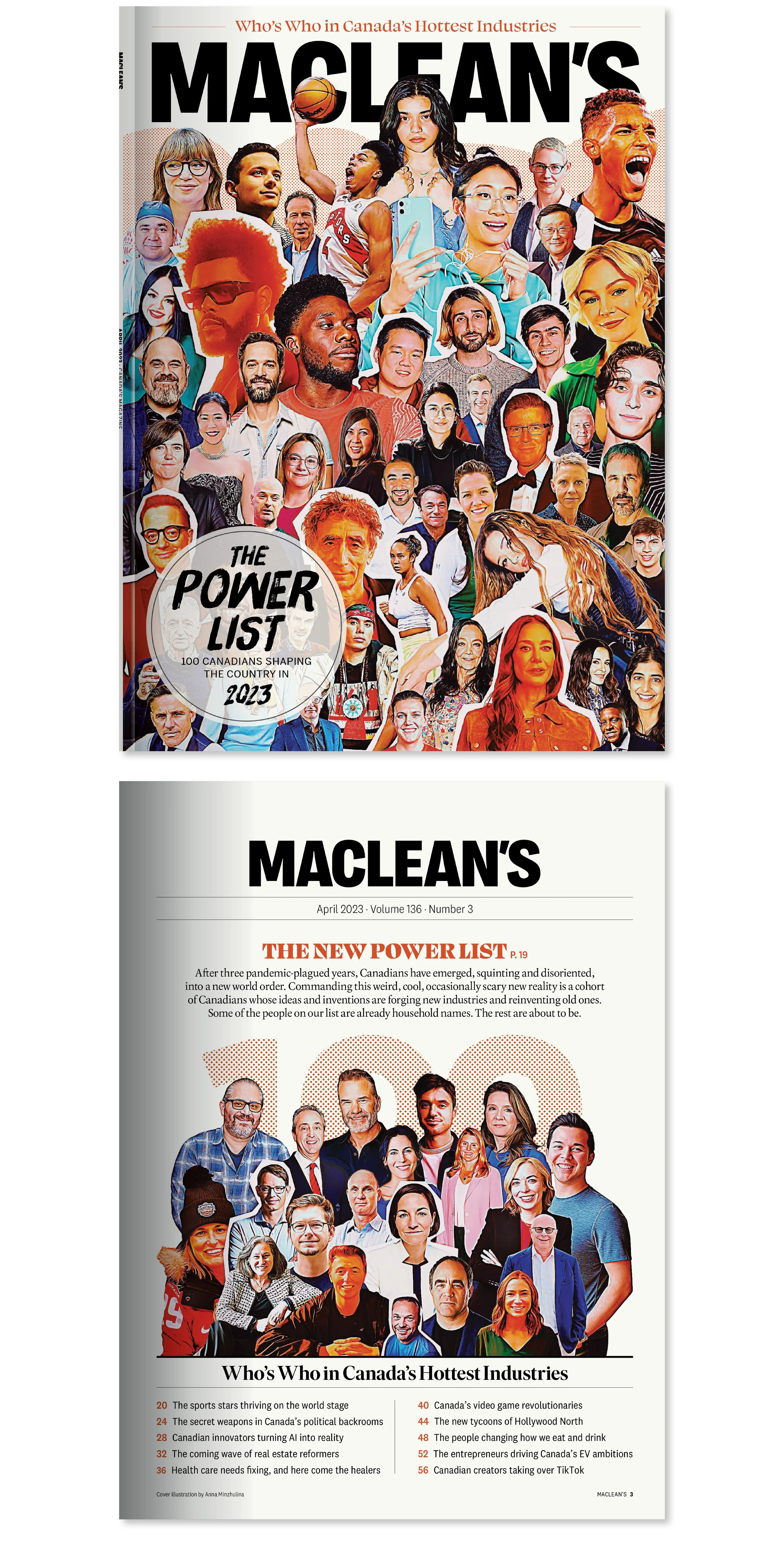
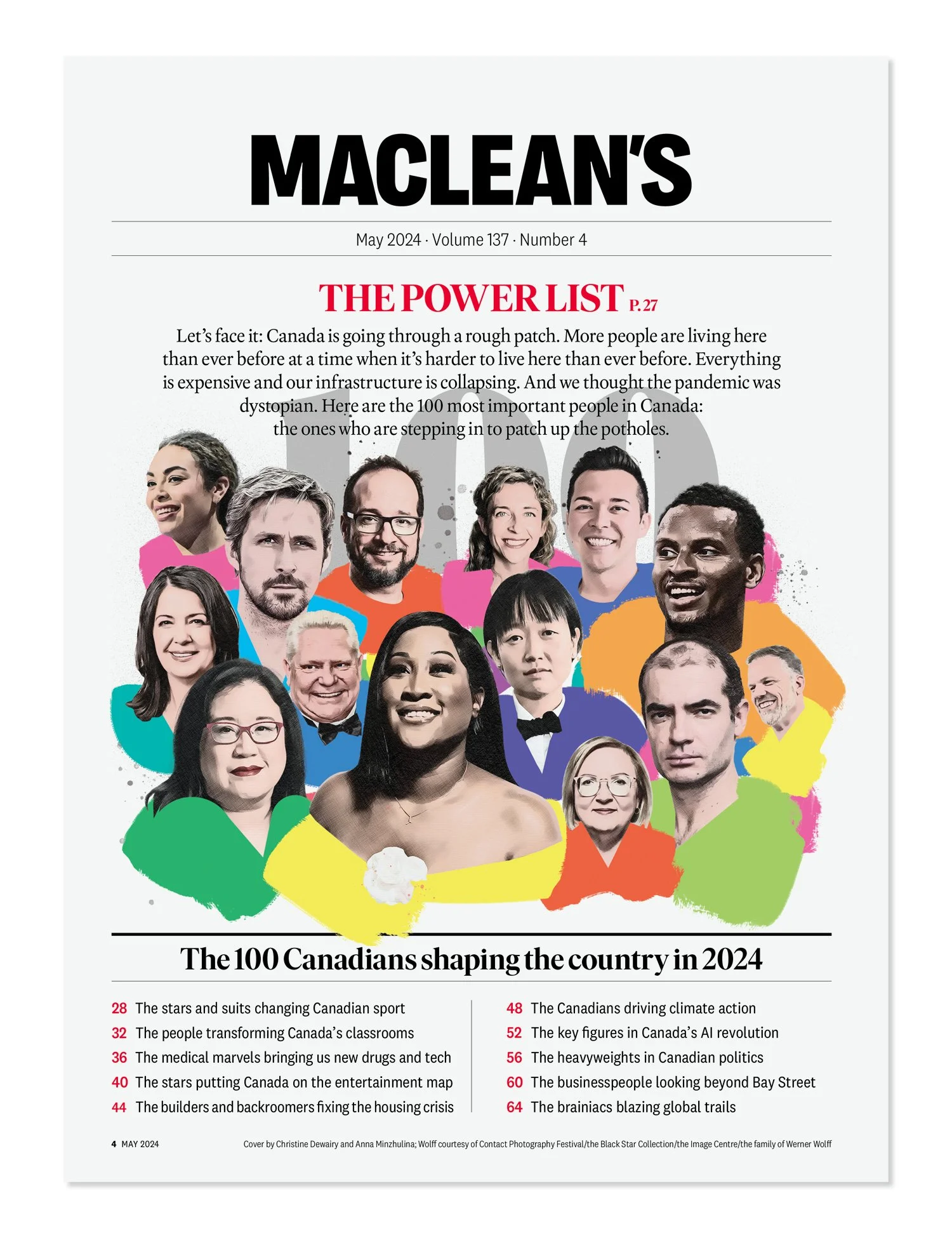
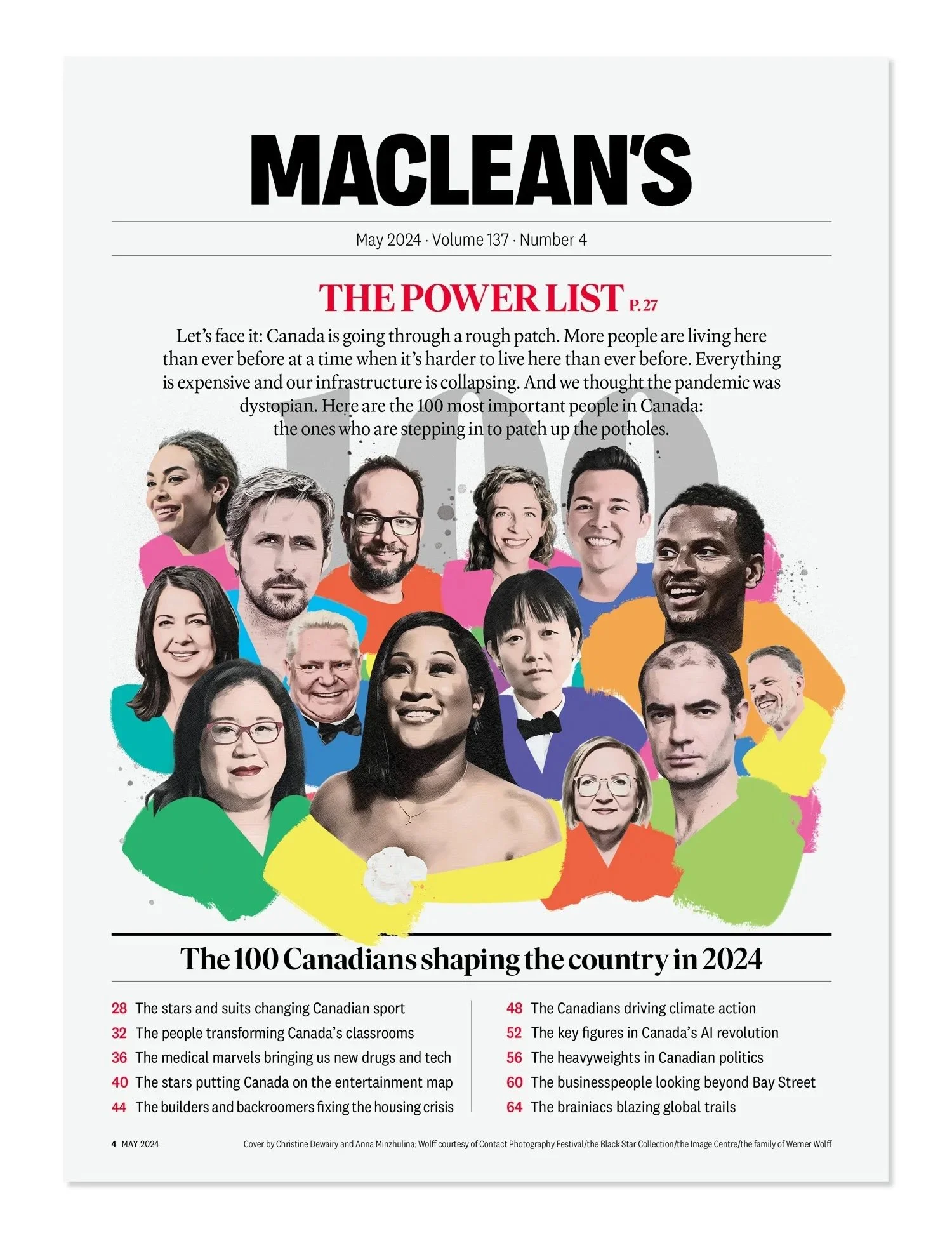
The interior and table of contents were also visually supported by custom AI art. For digital, Minzhulina designed and built a standalone web experience using the Elementor plugin—complete with a landing page, animated navigation elements (including a looping .GIF menu), and 14 modular story pages housing contributions from Canadian experts. Every element was designed for cohesion and cross-platform clarity.
The work required building a repeatable workflow—balancing experimentation with control—to ensure consistency across outputs while maintaining conceptual depth.
The project demonstrates how generative tools can support—rather than replace—editorial intelligence, extending the role of the art director into new creative territory.
The Impact: The project sparked wide internal discussion and external interest around AI's role in the future of creative direction. It positioned Maclean’s as a thought leader willing to take risks—not just editorially, but technologically.
For me, it marked a turning point in her practice—merging research, design, and speculative strategy into a singular, media-spanning execution. It stands as a landmark case of how generative tools can support—not replace—editorial intelligence and visual authorship.
This project marked a turning point in my practice—establishing a framework for integrating AI into editorial workflows while maintaining authorship, intention, and conceptual rigor.